












Are you getting enough sleep? Implementing good sleep hygiene practices could help you get a good night's sleep! Sleep hygiene means the set of daily routines, behaviors, and environmental practices that support good, restful, and consistent sleep. Keep reading for 3 tips for better sleep and make sure to grab the free sleep hygiene checklist!
Jump to:
Sleep is an undervalued component of your wellness picture. It seems to me, as Americans at least, we pride ourselves on needing less and less sleep to get by. It is in fact the only way to get more waking hours in the day.
However, if your energy is poor during the day because you either aren't sleeping long enough, or your sleep quality is poor, what does it matter how many hours you're awake? The goal, my friends, is not to have more awake hours in your day, but rather to have more exceptional energy in those waking hours.
Here's the equation you need to consider:
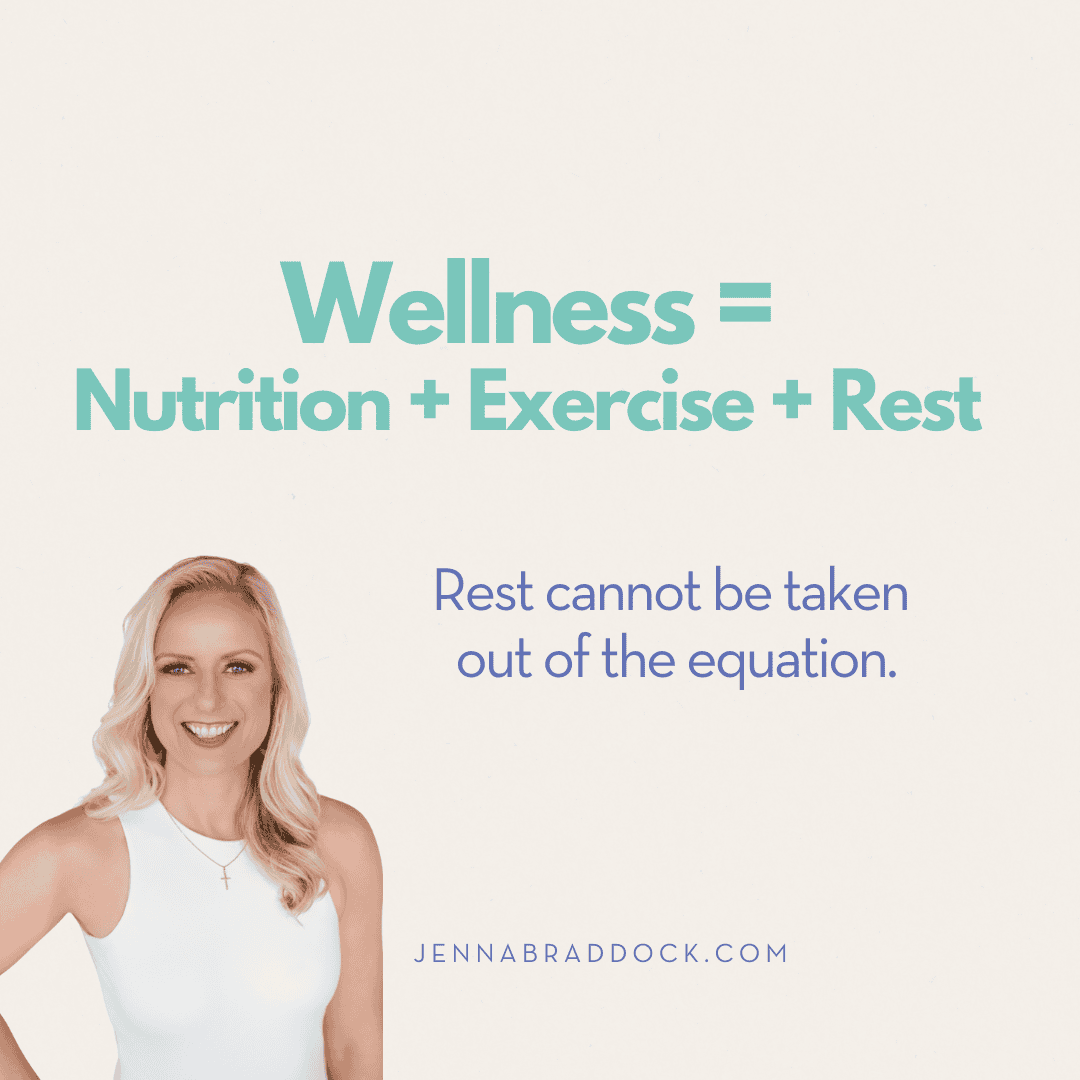
Wellness = Nutrition + Exercise + Rest
Rest cannot be taken out of your health picture. It's just too important. Not getting enough sleep does negatively impact your overall health. I repeat: inadequate sleep negatively impacts your health. You are not the one person immune from the effects. Whether you realize it or not (or want to admit it or not) sleep problems are slowly chipping away at your health.
Research shows lack of sleep contributes to a significant increase in risk for chronic health disease like heart diseases and heart attacks, stroke, and diabetes. It impacts your emotional health and mental health, leaving you with less emotional energy to give to those most important to you. It's been proven that you are not as mentally acute, potentially causing more accidents and certainly not performing at high levels at work. Really, the list goes on, and on, and on about how terrible the lack of sleep is for you.
Sleep is Crucial
There's a lot of reasons why you may not be getting enough nighttime sleep. These reasons affect me too. I'm a working parent, which in and of itself possesses enough responsibilities to keep any adult from regularly getting a good night of sleep. But what I'm realizing as a I get older (meaning I feel the effects of sleep loss more intensely) and what the research continues to tell us all, is that sleep is perhaps one of the most crucial aspects of health that we are not giving credence too.
While I am not a sleep expert, I am becoming a better-sleep warrior, poking and prodding people in this area to really make some changes. In my own life, I am very protective of my sleep as I have always needed around 8 hours to function somewhat normally (9 would be ideal). I've decided that there is a rarely a show or game on TV that is important enough to lose sleep over. I'm trying to turn my electronics off earlier, realizing that I am only about 25% as productive at night as I am in the morning.
More specifically, here are 3 tips for better sleep that have helped me:
Electronic Devices in the Bedroom
Bringing your phone into your bedroom at night might be one of the worst decisions ever! There, I said it. Don't throw tomatoes at me.
Screen time already fills your mind during the whole-darn day, why do that to yourself at night too?! Do you really think it's healthy to have your phone be the last thing you check at night and the first thing you look at in the morning? No. No it's not. Plus, the blue light emitted from your phone actually prevents melatonin, a natural sleep-inducing hormone, from being secreted. This means your body's natural ability to fall asleep is being hindered. NOT WORTH IT!
At night I now leave my phone in the kitchen to charge. There have been many times where I remembered something that I needed to do on my phone before bed (send an email or text for instance). Most of the time I just end up writing it down to complete in the morning, realizing it's not that important right now. Preparing for sleep with a healthier bedtime ritual is more important.
Alarm Clock Upgrade
If you use your phone as an alarm clock, it's time to go old school and just buy a real clock. I like battery operated ones with a volume control, like this stylish wood clock, because I get up before Coach.
The National Sleep Foundation recommends turning off your devices 30 minutes before bed and keeping them out of the bedroom all together; but I already told you that. =)
Sound Machine
Hearing noises while sleeping can wake you up, sometimes so briefly that you don't even fully realize it. Even these small interruptions in sleep can prevent you from getting the best quality. My boys have been sleeping with sound machines in their rooms since the day we brought them home from the hospital (thanks to the expert advice from Mom's On Call). Recently I put one in my bedroom and it has made a huge difference, especially for Coach, who is a light sleeper. It helps drown out some of the random, unimportant noises we don't need to hear, but still allows you to hear noises that you need to hear, say in an emergency.
This is my favorite sound machine because the noise is very clean sounding. Just trust me on this one. I've tried a few.
Sleep Hygiene Worksheet
To help you visualize what a healthy bedtime routine can look like, I've created a Sleep Hygiene Checklist. It covers building a consistent sleep schedule, daytime and evening choices to promote healthy sleep habits, bedtime rituals, screen time, and environmental factors. Download it free HERE.
For more information on Jenna's 1:1 Coaching for personalized guidance and strategic support click HERE.