











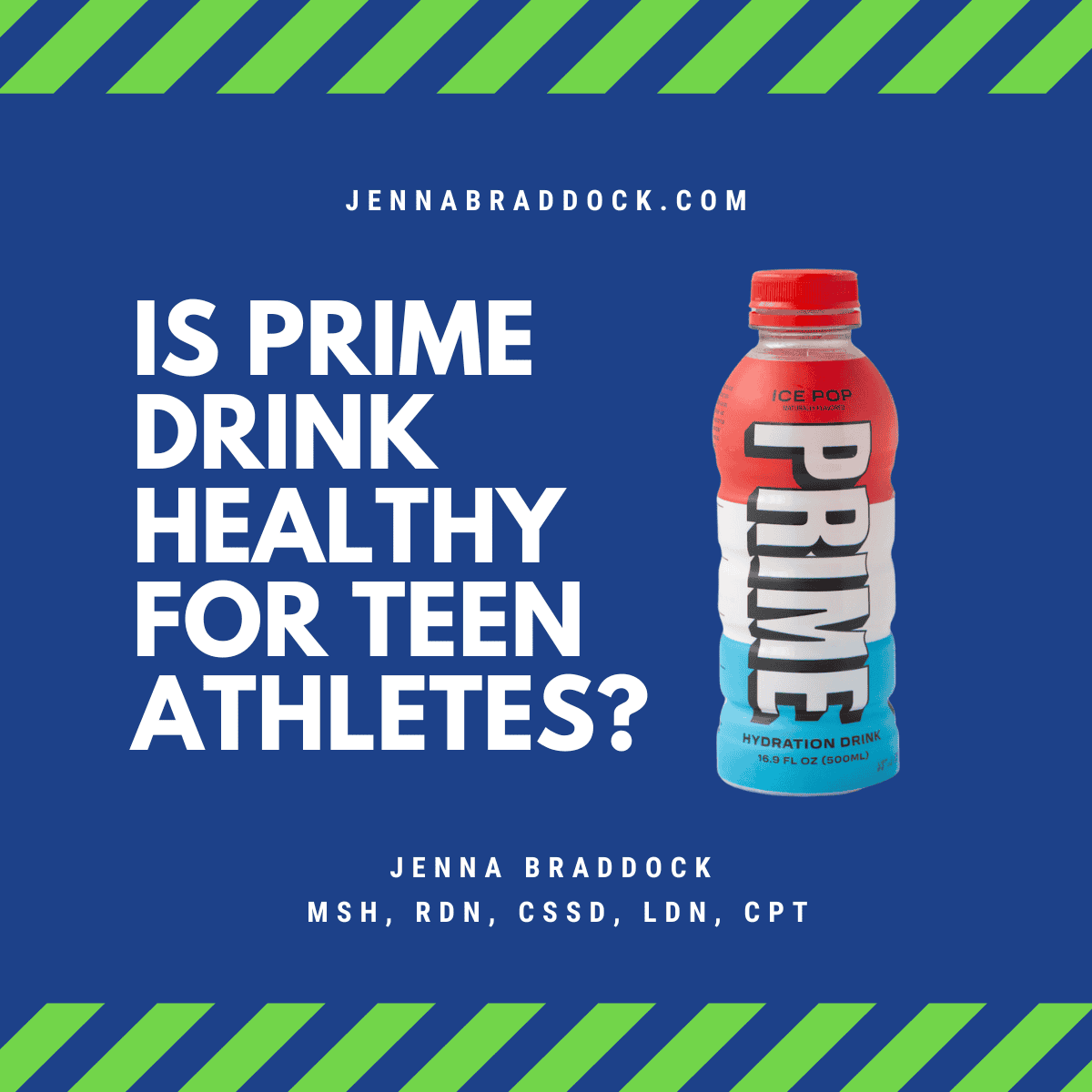
You’ve probably seen the Prime Hydration drink lining the shelves at your local grocery store or even in student’s lunch boxes at school. The Prime brand, created by athletes and social media stars KSI and Logan Paul, is promoted primarily to children, teenagers, and young people who participate in exercise and athletic sports. As a registered dietitian, I want to take a deep dive into what this relatively new beverage is made of. The big question is, is Prime hydration healthy?
For more nutrition tips for teen athletes, check out Creatine for Teen Athletes.
What Do Sports Drinks Do?
Athletes turn to sports drinks to help with hydration and improve athletic performance. These formulas are designed to hydrate and restore electrolytes and carbohydrates that are lost during exercise. When we look for a helpful sports drink we are typically looking for 3 things: electrolytes, BCAAs, and Carbohydrates. Electrolytes such as sodium, potassium, chloride, magnesium, calcium, and phosphate serve to replenish what is lost through sweating. To slow fatigue and improve muscle function, amino acids are often included. Finally, carbohydrates are present to help sustain energy and prevent bonking. Let’s see if Prime’s products meet these standards.
Prime Energy vs Prime Hydration
There are two main beverages: Prime Energy and Prime Hydration. Prime Energy drink contains 200 mg of caffeine whereas Prime Hydration does not contain caffeine. The intention of Prime Energy is to mimic an energy drink with high amounts of caffeine while Prime Hydration is intended to be consumed after intense exercise. The American Academy of Pediatrics suggests that children and teenagers avoid energy drinks with a high caffeine content, therefore Prime Hydration might be a healthier option. However, there is suspicion still with the beverage.
Prime Hydration Ingredients
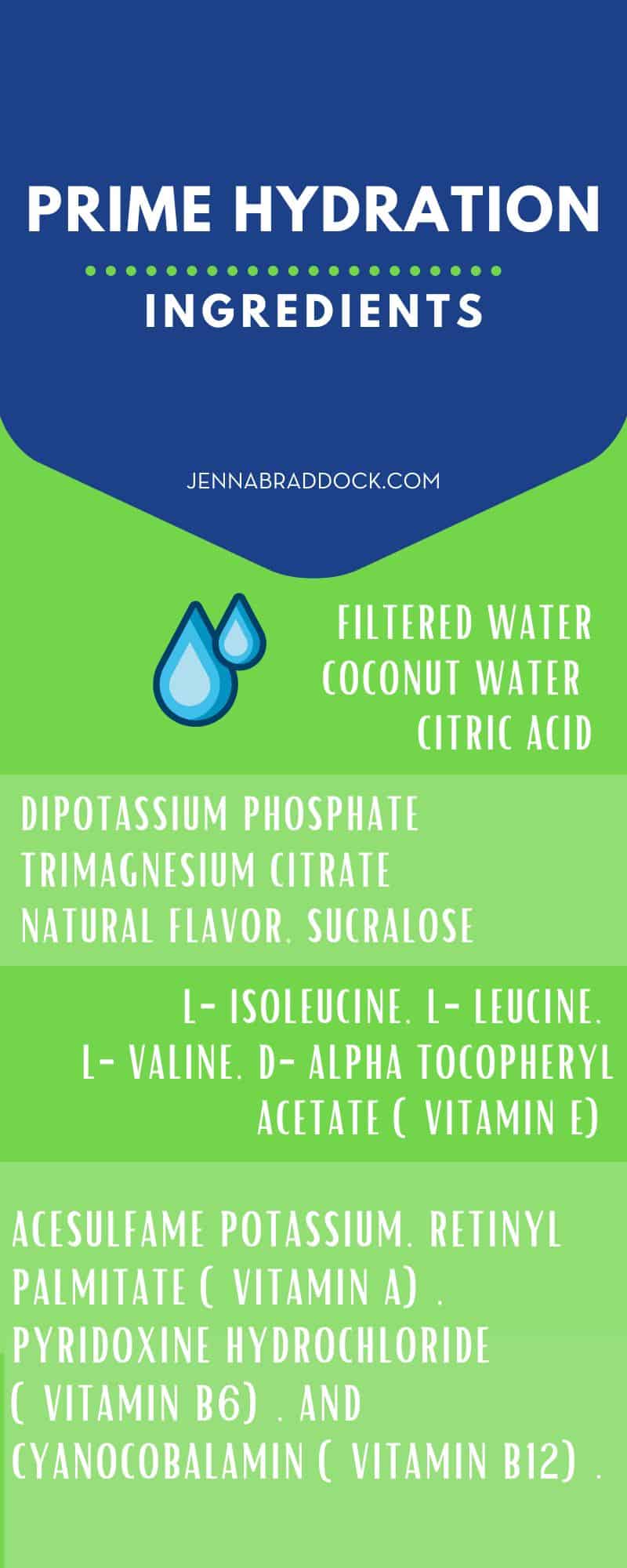
The Prime Hydration beverage ingredients list includes: filtered water, coconut water from concentrate, citric acid, dipotassium phosphate, trimagnesium citrate, natural flavor, sucralose, L-isoleucine, L-leucine, L-valine, D-alpha tocopheryl acetate (vitamin E), acesulfame potassium, retinyl palmitate (vitamin A), pyridoxine hydrochloride (vitamin B6), and cyanocobalamin (vitamin B-12). These ingredients can be found on the Prime website.
Branch Chain Amino Acids
Prime Hydration contains isoleucine, leucine, valine, also known as branched chain amino acids (BCAA’s). They promote protein synthesis, enhance athletic performance, and help with muscle mass and growth. One 500 mL bottle of Prime hydration contains 250 mg of BCAA’s and the recommended daily allowance (RDA) is about 4-20 grams per day. Labeling on the bottle of BCAA’s indicates that it will play a role in muscle function, but 250 mg of BCAAs is just not an adequate amount. This beverage is not a reliable source of BCAA’s. Dietary protein such as meat, poultry, fish, and beans will provide athletes with adequate BCAA intake daily. Prime Hydration drinks are likely not making a big difference here.
Sweeteners & Carbohydrate Content
This beverage is sugar free and contains artificial sweeteners such as sucralose and acesulfame potassium. The safety of artificial sweeteners is a highly controversial topic with nutrition experts ranging in their opinions on what you should consume and who should consume them. Recent studies have found that consistent sucralose and acesulfame potassium consumption may be interfering with insulin and glucose homeostasis by disrupting the balance of gut microbiome. The World Health Organization recently advised the public to not consume non-sugar sweeteners due to evidence of increased risks of type 2 diabetes, cardiovascular disease, and mortality in adults. There is also research to suggest that it is safe to consume them.
Personally, I would caution parents against giving children artificial sweeteners more than occasionally. The occasional intake of artificial sweeteners likely has zero impact on health or well-being, but if it is something that you’re trying to decide if you should drink on a regular basis, you may want to be cautious about that.
The recommended intake of sports beverages depends on exercise duration and intensity. Research suggests that as little as 20 grams of carbohydrates per hour is beneficial for athletes’ sports performance. The American College of Sports Medicine suggests that athletes should consume 30-60 grams of carbohydrates per hour during exercise. When looking for a beverage to support athletes during exercise and performance, we are wanting a product containing a combination of multiple different carbohydrates.
There are 6 grams of carbohydrates in one bottle of Prime Hydration. This is a small amount of carbohydrates to consume during exercise. So really, Prime Hydration offers little to no energy during exercise. There are no carbohydrates found within sucralose and acesulfame potassium, so where are these 6 grams coming from? It can be assumed that they are coming from the coconut water.

Coconut Water
Coconut water can be a natural alternative for such popular sports drinks because it has similar hydrating effects. Additionally, it is high in potassium and contains magnesium, chloride, antioxidants (arginine and vitamin C) and various carbohydrates (sucrose, glucose, and fructose). During exercise, it has been shown to maintain and improve hydration and reduce oxidative stress from exercise.
Electrolytes
We lose electrolytes when sweating, so athletes’ needs are increased. There are 834 mg of electrolytes in Prime hydration include potassium and magnesium. Compared to leading sports beverages, Prime Hydration has higher amounts of these electrolytes, however, it significantly lacks sodium, which is most important to replenish at higher levels.
Vitamin A
There are 900 mcg of Vitamin A in one bottle of Prime Hydration which is 100% of the RDA. The recommended intake for children and teenagers is between 600 and 900 mcg. Athletes are not depleted of this vitamin and they do not have higher needs for it. Vitamin A deficiencies are rare in the United States and most people get enough through food. Yellow, orange, and green leafy vegetables are all sources of beta-carotene.
Increased preformed Vitamin A (from supplements) can cause headaches, seizures, blurred vision, muscle aches, and coordination problems. However, consuming beta-carotene from food is harmless.
B6 and B12
The RDA for vitamin B6 is 1.3 milligrams and vitamin B12 is 2.4 micrograms and this beverage exceeds these levels. These B-Vitamins help utilize energy, metabolize amino acids, and aid in tissue repair. But are they helpful to an athlete’s success? Studies have shown that athletes do have higher dietary intake of B6 and B12, but you don’t necessarily need to get all of this from one beverage. There’s no guarantee this is actually benefiting a teen post-workout.
Benefits of Vitamin E
Vitamin E is also found in Prime Hydration. It prevents free radical damage to cell membranes, so it acts as an antioxidant. It can reduce oxidative stress after exercise. Athletes have lower levels of vitamin E compared to other antioxidants. The Prime Hydration beverage contains the full daily amount for young athletes.
Citric Acid
Prime Hydration contains citric acid, which is a preservative and flavoring agent and can cause tooth decay and erosion. Most sports drinks have a pH lower than 5.5, which leads to demineralization of enamel. When athletes are dehydrated due to physical activity, there is less salivary flow. Low salivary flow decreases the clearance of such acids and sugars from tooth surfaces, leading to poor dental health such as cavities and erosion.
Is This Popular Drink a Good Choice for You?
The bottom line is that yes, Prime hydrates, because it’s made with water! It just has insufficient electrolytes to really replace and replenish compared to others. It also doesn’t contain any energy to replenish glucose stores. For these reasons, it’s not an ideal choice to drink during practice or sports. Designed to be a re-hydration or re-fueling drink, it even falls short in these areas. The brand and related beverages are very popular and have high demand, but it is not the best option for teens. So in my opinion, I’d recommend you hydrate and restore energy requirements first with plain water and food, then use sports beverages as a secondary source for nutrients.